Interview by Jen, April 2026
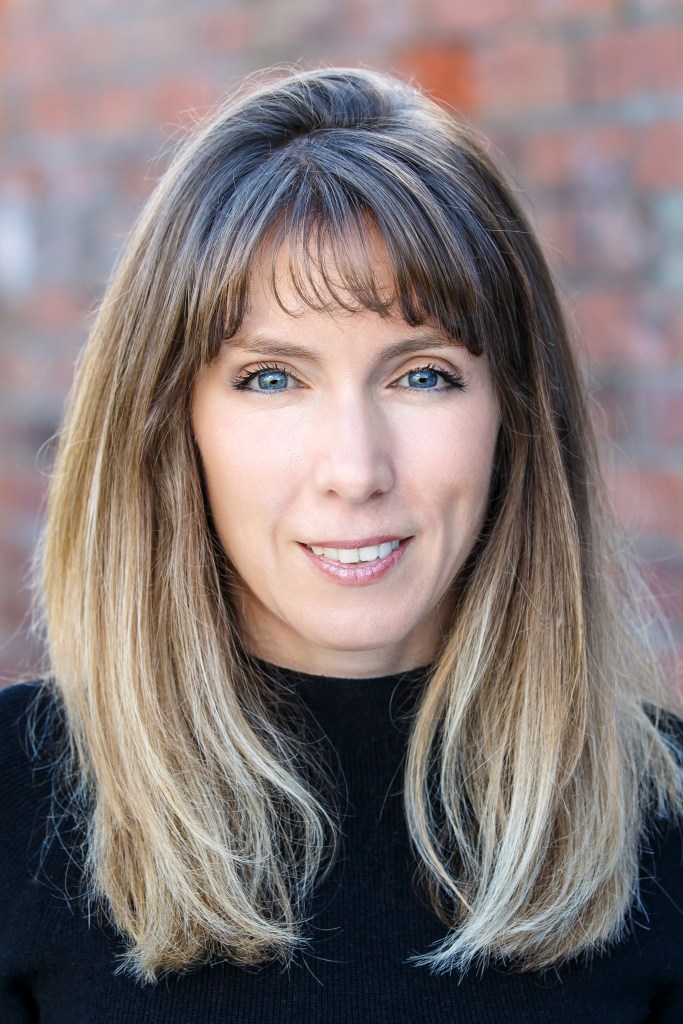
Elly Hanson is a Clinical Psychologist and researcher based in the UK. Embodying her core values of compassion and courage, social justice work is an integral part of her life.
Much of her work is focused on tackling sexual abuse and exploitation, and societal norms and systems that are conducive to harm, as well as supporting children and youth to flourish. She works with a wide range of people, including victims and survivors of abuse, policy-makers, national organizations, and the justice system.
In addition to her work as a psychologist and researcher, she is a part-time strategy director at CEASE, a charity working to end all sexual exploitation. She is also a research lead at Fully Human, a think tank initiative of the PSHE Association (Person, Social, Health, and Economic education).
In 2025, in partnership with the National Police Chief’s Council (in the UK), the Hydrant Programme, and NAPAC (The National Association for People Abused in Childhood), she wrote and released the research paper: “Organized ritual abuse and its wider context: Degradation, deception and disavowal.”
This research paper gathers the existing research in one place and uses a rational approach to change the societal discourse on ritual abuse. Although efforts are being made to reach key sectors, such as social workers and police officers, the paper’s intended for a wide audience. One of its major ambitions is to move people from disbelief to acknowledgement and understanding.
In this interview, Elly Hanson talks about how she was drawn to her field of work, the importance of living in alignment with your values, and how she came to create her paper on ritual abuse. I hope you find her and her work as inspiring as I did.
For more information on Elly Hanson and to access her papers, articles, and talks:
https://www.drellyhanson.com/
To read Elly Hanson’s research paper:
Organized ritual abuse and its wider context: Degradation, deception and disavowal
What led you to become both a psychologist and researcher? And to your focus of applying research to practice and policy?
Looking back, it was probably two dovetailing things – an interest in what makes people tick, combined with wanting to help make the world a better place. If we understand ourselves, we are better equipped in our collective efforts to help humans heal, flourish, and thrive. So much insightful research is done, but then people don’t know about it or it isn’t used. So I’m passionate about helping to bridge that gap. In particular, brilliant research exists that helps to give survivors a voice, and it’s critical that it is widely heard and acted upon.
How did you find and connect with the PSHE Association and Fully Human? Why do you believe PSHE education (Personal, Social, Health, and Economic education) is so important for young people?
I work in a few different areas of expertise, but I believe there’s synergy across all of them. As a psychologist, I’ve journeyed with many traumatised people, and I want to use the understanding I’ve gained to work “upstream” of problems. That means trying to tackle some of the root causes and issues with the system.
One of the places I’ve worked is an organisation called CEOP (part of the UK’s National Crime Agency), which is a team focussed on online harms and safety. I was involved in early discussions and work on how we can help keep children safe online. One of my colleagues there went on to lead the PSHE Association, which supports good education for children on key parts of life, beyond the classic classroom topics. We set up ‘Fully Human’ as a small thinktank aiming to explore big questions around childhood, tech, and education.
In some podcasts you’ve been on, you talked about the importance of values. Could you elaborate on values: e.g. what values are, why they are important, how they relate to your work, and the way a focus on values has shaped your life?
Interestingly, research shows that most people hold core values of compassion – most of us think it’s important to care about each other and the world we live in, but many of us make the mistake of thinking that we’re in the minority to think like this. There are so many societal forces convincing us that we’re a selfish species focussed on things like money, appearance, status, celebrity and power – and of course many people are like that. But, I think there would be far fewer of those people, and they’d have less power, if we as a society created more spaces for ourselves to reflect on and work out our core values, and to act in line with them.
Recently you wrote a research paper called Organized ritual abuse and its wider context. What led you to focus on ritual abuse and ultimately write this paper? And how did you come to partner with the National Police Chiefs’ Council in the UK on it?
It’s been around twenty years that I’ve been acutely and painfully aware of ritual abuse, since I worked in a trauma team of a drugs and alcohol service. Like, no doubt, most people reading this, I’ve been deeply pained and agitated about the lack of societal recognition and understanding, the general discourse of disbelief, and all the problems this leads to – most critically, how this enables and facilitates ongoing abuse.
I was keen to write this report for a long time because it felt like a missing piece, something that could really help effect change. There is a lot of excellent research and knowledge about ritual abuse and wider, related issues. And, equally, on the pervasive disbelief and disavowal of these issues. I felt this all needed to be brought together with clarity, logic and care, so that people reading the report could go on a journey to understanding and change.
The opportunity to write and publish the report with the Hydrant Programme (part of the National Police Chiefs’ Council) and NAPAC (a UK charity for survivors of child abuse) came from long-standing work with them on this issue. That work, in turn, arose through long-standing working relationships with them that were more generally focussed on tackling abuse.
Did you encounter any pushback to doing research on ritual abuse from the police or others, and if so, how did you deal with it? And have you ever felt unsafe because of doing this work?
Yes, certainly some previous attempts to bring the issue to light have been met with resistance! Sometimes it’s not always possible to overcome people’s or an organization’s resistance, and you just have to try and find other paths forward. For example, some people within the police are actively disinterested in ritual abuse, but some have different, more positive approaches, such as the police who supported my report on ritual abuse. I’ve found perseverance, patience, and building trust over time are key to making progress.
I have at times felt unsafe, for example, I have in the past been attacked in the media. On the other hand, comparatively I am in a much safer position than many. I think it’s vital that people like me, with comparative freedom, use that in the collective fight for the freedom of others.
Was it difficult to find good data on ritual abuse and why? Could you speak to the challenges of doing research in this area?
Yes, on the one hand there’s lots of excellent research on extreme and organized forms of abuse. And on the other hand, there isn’t nearly as much research on these topics as we need. In part, that’s because of the vicious spirals that “default disbelief” sets in play. Meaning, if we believe it doesn’t exist, then we don’t need to ask questions about it, spend money on research around it, etc.
Also, for many survivors, it’s understandably a bridge too far to speak to researchers about their experiences, given everything they’re dealing with (fear, threats, dissociation, ongoing abuse, and more besides).
Despite all this it’s striking how many survivors have overcome the odds to share their experiences and insights with researchers, therapists, other survivors, helplines, police, and others. It’s a testament to their courage that we know as much as we do.
Researchers in Germany have carried out large surveys of ritual abuse survivors and of therapists who work with survivors, and I’d love to see similar types of study carried out in other countries. And it would be very insightful if research into wider child abuse, such as surveys of child sexual abuse material (CSAM) survivors, asked about organized and ritual forms of child abuse.
What brings you joy in life? How do you find some balance between working so closely with trauma and injustice, and nurturing yourself, so you can stay optimistic enough to keep doing the work?
Fundamentally, it’s the wonderful people in my life who bring me joy, and being part of various collective efforts to tackle harm and injustice. Plus, the simple things – like birdsong, warm sunshine and cozy corners, and good books, food, and music! All of us who have journeyed with tough stuff know the importance of cherishing the little things, and survivors are the greatest inspiration to me in this.
What is your bigger vision for this work?
I believe we can build a society in which the most extreme forms of harm are acknowledged and understood, prevented and acted upon. And in which those who have suffered these harms are met with validation, love, and roads to healing. We have a long way to go here, but true hope is active and empowering. I love how Rebecca Solnit (an American writer and activist) sums up this philosophy:
“Hope is a gift you don’t have to surrender, a power you don’t have to give away… anything could happen and whether we act or not has everything to do with it.”
Do you have any message you would like to give to survivors and/or their allies?
Perhaps, for my last words, I’ll just echo the Horse in Charlie Mackesy’s beautiful book, The Boy, the Mole, the Fox and the Horse:
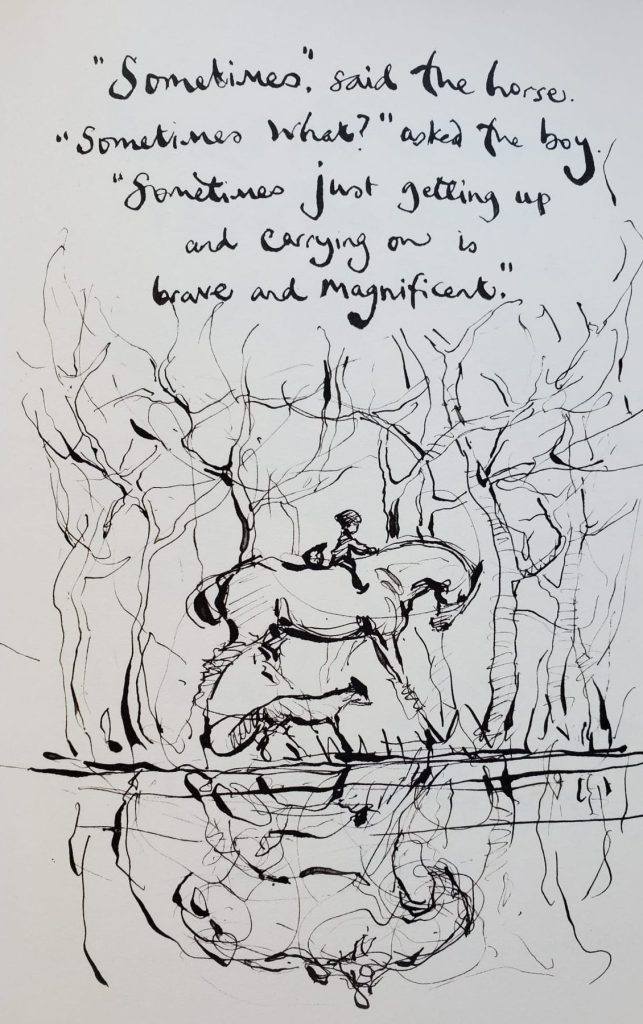
“Sometimes,” said the horse.
“Sometimes what?” asked the boy.
“Sometimes just getting up and carrying on is brave and magnificent.”

