Interview by Jen, August 2025
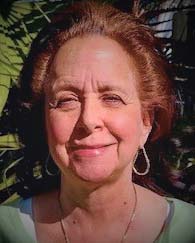
Psychologist, Ellen P. Lacter, is considered one of the pioneers in helping survivors of ritual abuse and mind control heal. Since 1986 she has worked in private practice, with a focus on abuse and trauma in children and adults, including the use of play and art therapy. She has also written a number of articles on healing from ritual abuse and mind control (RA/MC), including:
- Lacter, E. (2011). Torture-based Mind Control: Psychological Mechanisms and Psychotherapeutic Approaches to Overcoming Mind Control. In O.B. Epstein, J. Schwartz, R. Wingfield (Eds.), Ritual Abuse and Mind Control: The Manipulation of Attachment Needs, pp 57-142. London: Karnac.
- Lacter, E. & Lehman, K. (2008). Guidelines to Differential Diagnosis between Schizophrenia and Ritual Abuse/Mind Control Traumatic Stress. In J.R. Noblitt & P. Perskin (Eds.), Ritual Abuse in the Twenty-first Century: Psychological, Forensic, Social and Political Considerations, pp. 85-154. Oregon: Robert D. Reed Publishers.
- Lacter, E. (2008). Mind Control: Simple to Complex. In A. Sachs & G. Galton (Eds). Forensic Aspects of Dissociative Identity Disorder. London: Karnac.
- Lacter, E, (2006). Chapter in Forgiveness and Child Abuse: Would You Forgive, by Lois Einhorn. Midpoint Trade Books: New York.
An artist and creative soul at heart, one of her more unusual, and well received, projects was A Coloring Book of Healing Images for Adult Survivors of Child Abuse.
Her website is End Ritual Abuse.
We at GrassRoots deeply appreciate the dedicated work Ellen Lacter does, and continues to do, to help and advocate for survivors. In this Trailblazers interview, Ellen Lacter shares how she came to specialize in helping ritual abuse and mind control survivors heal, and she gives us a deeper insight into her life and work.
What led you to become a psychologist?
I started with a B.A, in art, mostly drawing, and I loved it. After college, I could not decide if I wanted to pursue fine arts or art therapy. It was hard to give up either one! But, I decided on art therapy and got a Master’s degree at Pratt Institute in 1977. I worked in a day treatment program and then attended the Institute for Expressive Analysis in the evenings. That was all good stuff. However, my art therapy degree would not allow me to become a psychoanalyst even if I finished the four years at the Institute (I did three). So, I decided to get a doctorate in psychology and moved to San Diego to attend California School for Professional Psychology. For my post-doctoral internship in 1984 and 1985, I worked in a small clinic and that was when I really began to learn about child abuse. I worked with kids, teens, and adults. I applied my understanding of art therapy to play therapy, since both heavily rely on symbolic communication. In 1986, I went into private practice. Through reading what was available on play therapy at the time, and a good deal of trial-and error. I developed my own approach to play therapy with abused children, which is quite similar to the relatively new approach of Synergetic Play Therapy.
In particular, what led you to specialize in helping survivors of RA/MC?
I learned about ritual abuse and mind control largely by chance, like so many of my colleagues. Both adult and child clients came in with presenting problems of less severe abuse, and it soon became apparent that their abuse was more extreme. With children, clues to extreme and horrible abuse would spontaneously emerge in their play. Adults would divulge memories of sadism I had never encountered before. I had learned a little about “Multiple Personality Disorder” (Dissociative Identity Disorder – DID) and ritual abuse in a workshop in 1989. That workshop provided the conceptual basis to understand what I was seeing. Fortunately, I found a group of local therapists who were meeting bi-monthly to support each other in working with DID and ritual abuse. I learned a great deal in that peer supervision group. I also obtained individual supervision from a therapist with substantial experience. It took quite a bit more time to grasp the nature of abusive mind control, that is, the systematic manipulation and control of dissociated identities to perform both external and internal functions that serve the abusers, as so much mind control is very complex. I will always be working to deepen my understanding of how it is “installed” and how it functions.
Very few therapists work with child survivors. How did you become drawn to working with children, and what techniques do you use with them?
I have always been drawn to kids. Even as a child, I always best loved films that had child characters. I love that the world is new to children, and everything is so beautiful and wondrous for them. I love to introduce them to art, and music, and nature, and toys for imaginative play. I love to see how children play, how they symbolize their fears and their wishes, and how they work to overcome what troubles them in the miniature, imaginative world of their play dramas. I love to help them in this creative process. I believe this is their most adaptive coping mechanism and a large piece of how they come to know and become themselves.
How did the backlash of False Memory Syndrome (FMS) affect your clients and your practice?
The False Memory Syndrome Foundation (FMSF), “memory wars,” and “child abuse backlash” have disgusted me from the start and propelled me forward to stand up for what I know to be the truth. This disinformation campaign is a big reason I started my website: www.endritualabuse.org. At first, I called it: TruthBeKnown2000. I had to stand up! Still to this day, I get emails from survivors who tell me that they thought they had False Memory Syndrome (FMS) or were crazy because of what they read by the FMSF, but then they found my website, and realized that their memories were real. I feel very grateful that I can do that for people. I have been attacked by the FMSF and their like in a number of ways over the years, and I have been very fortunate to have won these battles. I will take a little bit of credit for that because I am careful about what I say and write, but I have also had some good luck. Some valued colleagues have had less luck, through no fault of their own, which saddens me deeply.
I would say that therapy clients are more negatively affected by the anti-therapy programming that their abusers systematically imposed on them than the disinformation campaigns of the FMSF and others. Luckily, there is good information about the realities of ritual abuse and mind control on the internet, in academic publications, and in autobiographies by survivors with lived experience.
Are you ever worried for your safety in this work?
I am not too worried about my safety because I think that most ritual abuse and mind control abuser networks usually attack therapists professionally rather than physically, and I have weathered the professional attacks well. I think that most abuser networks are afraid that therapists would be viewed as credible witnesses if they reported any malfeasance to the police. I also believe that they fear that we will publish any evidence of harassment, etc., on the internet and that this would add to the evidence that these kinds of networks exist, which would be their greatest fear.
Helping survivors heal and hearing about such horrific trauma is hard work. What motivates you to continue and what do you do for self-care?
I do not understand how therapists who, for the most part, have relatively privileged lives can turn their backs on victims of the worst cruelty and sadism imaginable. Yes, it’s hard and painful work, but what are we doing on this earth if not trying to help each other? My self-care includes being in nature, cooking and enjoying good food, small acts of kindness, wandering around thrift stores, creative projects, such as stories I write for clients, fighting the good fight, and standing together with other activists.
You’ve written a number of articles on RA/MC, listed at the beginning of this interview. However, one of your projects was very different… How did your coloring book come into being?
Hmmm. Art is a big part of me. When I go to a museum, I go a little crazy because I am not doing my own art anymore! “How did they do that?” “I want to try that!”
I understand the impact of imagery. I think “we” (therapists) need to speak to the right brain, the emotional brain, the unconscious mind. So much trauma is stored in the emotional brain, and this is also where so much healing can happen. Art can do this. Play can do this. Metaphor and stories can do this.
I think a lot of books for trauma survivors are too cognitive, too psychological in their language, too much to process. In the coloring book, I am trying to speak to people through imagery and prose-like language, to reach to people’s hearts. I came up with ideas of healing images, pictures that people could color, while reflecting on the healing ideas suggested in the images. Then I communicated my ideas to the two illustrators, Robin Baird Lewis and Jen Callow (you). And they both somehow knew what to create. It was a relatively smooth process, a meeting of the minds. And then Lynn Schirmer, artist and layout artist, put it all together. It still makes me happy to look at it.
What are your biggest joys in life?
I am very lucky to have some very good people in my life. This includes some wonderful clients!
What legacy do you want to leave behind? Or what message would you like to pass on to survivors and/or therapists?
I would like to get more of my ideas “out there.” I have enough content for a special issues book about ritual abuse and mind control. However, it is one thing to put creative therapeutic ideas down on paper, and it’s a whole other time-intensive endeavor to get something publication-ready. So, there is a lot more work to do.
I want survivors to know they are believed, that they are good, and that whatever horrible things they were coerced to do through torture and mind control were not their choice. We are all the same… born innocent, and able to be victimized in unfathomable ways.
I want therapists to have knowledge, tools, and support.
I want us all to not let malevolent forces like the FMSF oppress us. I want more of us to stand up and to stand together for what is true and right.
I want all of us to send good ripples, ripples of kindness, not ripples of cruelty, out to each other and into the universe.
I want to inspire more people to make a difference. Thank you for helping me do just that!
 BY OURSELVES | ABOUT OURSELVES | FOR OURSELVES | FOR EACH OTHER |