Interview by Jen, December 2024
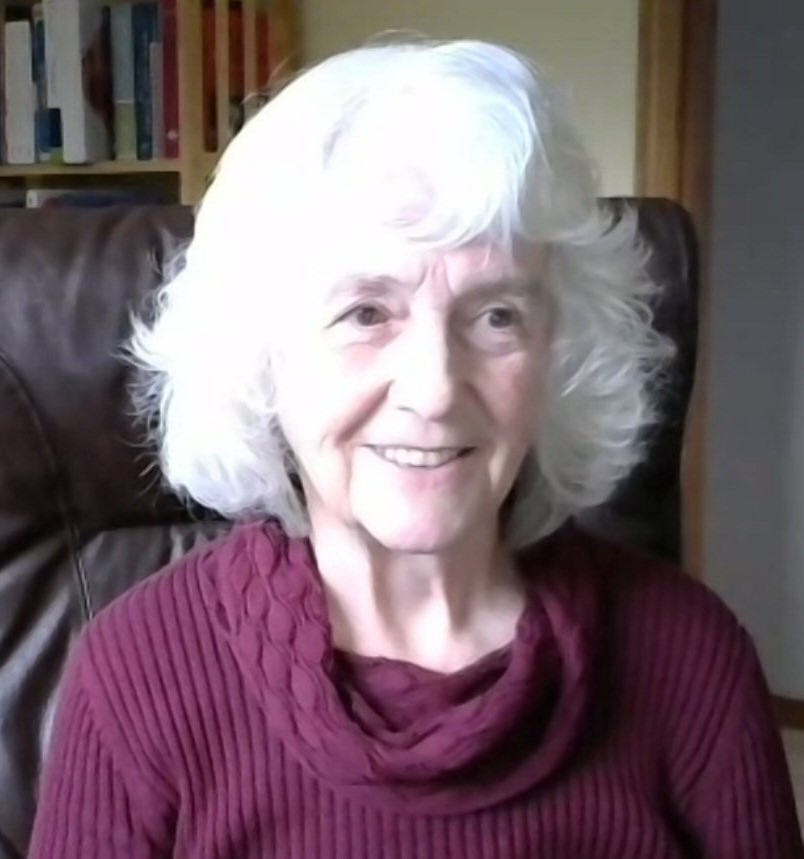
Psychologist, Alison Miller, is considered one of the pioneers in helping survivors of ritual abuse and mind control heal. Since 1991, she has treated and learned from people who experienced organized abuse.
In her last years of private practice before retirement, Alison dedicated herself to educating therapists and empowering survivors through her books:
- Healing the Unimaginable: Treating Ritual Abuse and Mind Control
(for therapists, written in 2012) - Becoming Yourself: Overcoming Ritual Abuse and Mind Control
(for survivors, written in 2014) - From the Trenches: A Victim and Therapist Talk About Mind Control and Ritual Abuse
(with Wendy Hoffman, written in 2016)
Recently, seven years after retiring, she wrote:
- Demystifying Mind Control and Ritual Abuse: A Manual for Therapists
(written in 2024)
We are grateful for Alison’s work and her legacy, as it has deeply impacted our healing, and we were excited to find out more about her journey.
In this fascinating interview, Alison shares what led her to psychology and how she unexpectedly came to specialize in helping survivors of ritual abuse and mind control heal.
What led you to become a psychologist?
I always had an interest in understanding myself and other people, especially as I did a lot of informal counselling of my peers in my teens. In my youthful innocence, I assumed that psychology courses would help me understand and help people better. For the most part, they didn’t. But they helped me clarify my own thoughts. For example, a course in “The Psychology of Adjustment” firmed up my personal belief that adjustment to a dysfunctional society was not truly healthy, although the textbook assumed it was. And my “Abnormal Psychology” courses and internships at mental hospitals made it clear to me that something important was missing in psychology’s understanding of human beings and what could go wrong for people. However, one of my classmates referred to his PhD as his “meal ticket,” and it turned out to be mine as well, a way to earn a living while doing what I loved, therapy.
With a brand new Psychology PhD, I was hired by a government agency to treat children. I quickly realized that you can’t help children without helping their parents. So I worked with parents and families, and developed parent education programs, using community volunteers. My colleagues and I were allowed to arrange our own continuing education events, and in those I was exposed to much helpful information from family systems theory and attachment theory, which I incorporated into my courses and parenting books.
In particular, what led you to specialize in helping survivors of RA/MC?
About ten years into my work in the mental health system, a supposedly “borderline” young mother whom I was trying to help kept talking about her “inner child.” I thought she was just part of a fad until her inner child, who was very real, stole a wheelchair from the hospital I worked in and told the security personnel she was my employee. That caught my attention. Then one evening I was on telephone duty and a young man called in saying he was having flashbacks of ritual abuse, something I had never heard of. I helped him through the current flashback, and he insisted on seeing me as a client. I discovered he was already a client of the Centre and had the label “paranoid schizophrenic.” Both of these people had been labeled and periodically hospitalized. I wanted to understand them, so I listened to them. Both of them turned into children at times, so the proper diagnosis should have been what was then called Multiple Personality Disorder (now Dissociative Identity Disorder.) I discovered that the missing piece in understanding these clients was childhood trauma. Listening to them, I was plunged into the horrific world of childhood rape, Satanism, and widespread organized perpetrator groups who deliberately traumatize children in order to split their identities and turn them into mind-controlled slaves who are designed to never consciously remember what has been done to them.
I was both fascinated and appalled. How dared abusers do such things to children! And how dared the mental health system ignore what was really going on! I moved to a different Mental Health Centre where I recognized some teenage clients as survivors. When I moved into private practice, I accumulated more clients with this background, as local therapists felt out of their depth and were relieved to be able to send these clients to someone with more knowledge. Not that I had any knowledge, but the clients did, and I could learn from them. I continued to learn and make sense of it all, assisted by several brave clients.
How did the backlash of False Memory Syndrome affect your clients and your practice?
Very little. One teenage client’s mother (described by the client as a “chronic litigator”) did make a complaint against me to my licensing board, but it was dismissed when the woman did not respond to the board’s letter to her. A few years later, she rewrote the complaint and sent it in. The board asked me what they should do with it, and I suggested they put it in the circular file on the floor.
However, the international group who held conferences for therapists dealing with dissociation was affected by the backlash, with lawsuits against some leaders, and what had initially been a supportive peer group turned its focus away from organized abuse, for self-protection. We had to discuss ritual abuse and mind control in the corridors and small meeting rooms of conference hotels rather than having major presentations about these abuses.
Were you ever worried for your or your clients’ safety, in particular when helping survivors still connected to perpetrator groups? And if so, what steps did you take to protect yourself and your clients?
Yes, I did worry. It was not long in this work before I discovered that four of my first survivor clients were members of the same Satanic group and knew one another through that group. They were abused at regular intervals, as the group pursued them vigorously. I had no way to protect the clients. I had to accept that these clients were going to be hurt, and it was up to them to decide whether therapy was worth it. They felt it was. I developed a policy of working through current abuse memories with each client, to discover and dismantle the trainings (“programs”) which the group was trying to reinstate as the clients struggled for freedom. Clients delivered me death threats, and although I was afraid, I recognized that the local abuser group was not stupid, and since I had given the names of their leaders to the police and to other professionals whose identities were not known to the group, harming me would not be in their best interest.
Helping survivors heal and hearing about such horrific trauma is hard work. What motivated you to continue it for so many years and what did you do for self care?
I loved my clients. It is empowering to see your work making a difference in someone’s life. I was putting my own gifts to their best use. For self-care, I tended my garden, walked with my dogs, and played Heroes of Might and Magic games on the computer.
How did your books come into being? (They are listed at the beginning of this article.)
In my teenage years, I wanted to be a writer. I envisioned living alone in a little house by the water, in the trees, and writing science fiction stories. I put my writing ambition away when there were no decent writing courses at my university. With regard to ritual abuse and mind control, I waited twenty years to see in print the book I wanted, the one that would explain to me and other therapists how organized abuser groups trained and controlled their victims, and how to treat these victims. It never appeared. I finally wrote it myself, and Karnac Books was brave enough to publish it. Two years later I wrote a companion book for survivors. And now a decade later when I am older and need to pass the baton, I am hoping my most recent book will help new therapists entering this field, and remind experienced therapists of the basics of this work. I’m now in that house in the forest. Some would consider my writings to be science fiction, but sadly they are not.
Now that you are retired, what are your biggest joys in life?
Knowing that I have done something worthwhile with my life. Enjoying nature, smelling the flowers, connecting with the trees, swimming in the lake. Spending time with my grandsons. Singing in the community choir.
What legacy do you want to leave behind? Or what message would you like to pass on to survivors and/or therapists?
My books are my legacy.
To survivors: There is nothing more worthwhile than having your life be your own. It is your birthright as a human being. It is hard work to get there, but infinitely valuable work.
To therapists: This is the most challenging kind of work you can do, but it is very worthwhile for you as well as for your clients. You will grow in ways you cannot even imagine.
 BY OURSELVES | ABOUT OURSELVES | FOR OURSELVES | FOR EACH OTHER |